
REVIEW · LISBON CASTLE TOURS
Discover Alfama with the Exterior View of São Jorge Castle
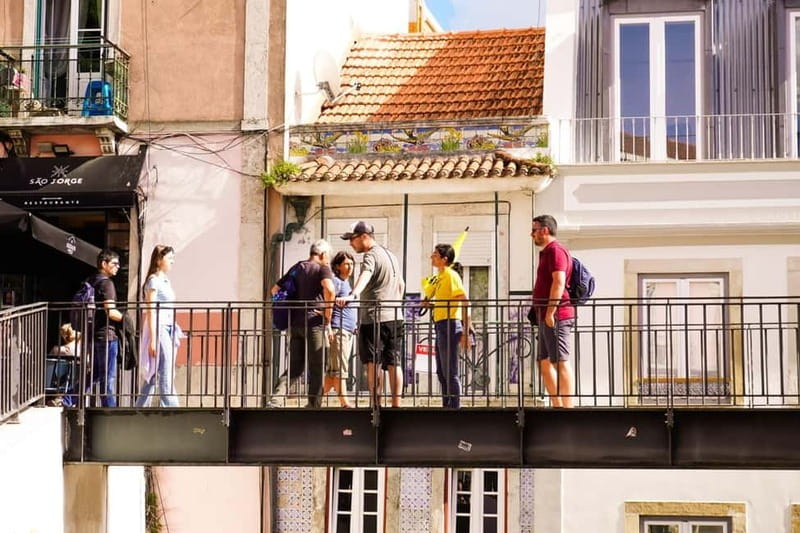
Alfama is Lisbon at its most atmospheric: steep lanes, tiled walls, old churches, laundry above your head, and broad views over terracotta roofs to the Tagus. This walk starts in Rossio Square and leads you into the city’s oldest surviving quarter, including the Portas do Sol viewpoint and an exterior look at São Jorge Castle.
I like the focus on Fado and local history, rather than a quick march past monuments. I also like the chance to understand why Alfama survived the 1755 earthquake while much of Lisbon did not. The main point to consider is the uphill, uneven walking, and the unusual pricing arrangement may need clarification before you set out.
Key points at a glance
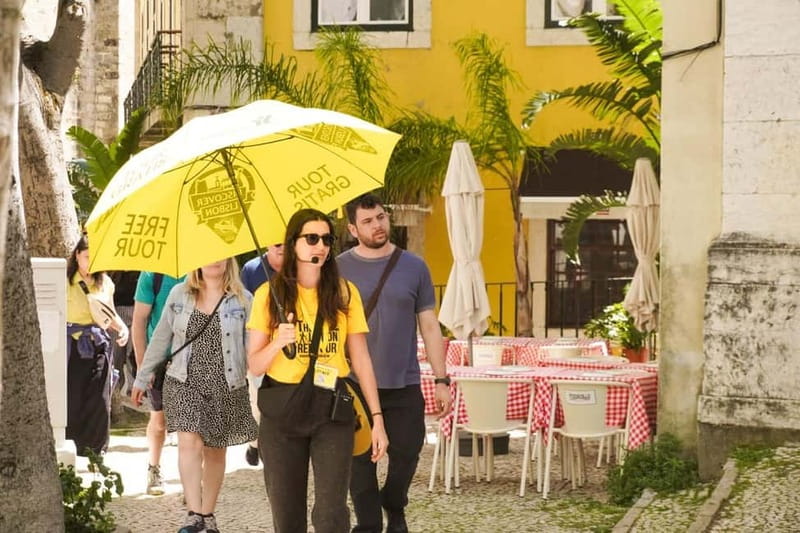
- Rossio starting point: Find the guide beside the statue in the middle of the square, marked by a yellow umbrella and yellow shirt or hoodie.
- Alfama’s Arabic name: Learn how Al-hamma refers to hot fountains or baths.
- Portas do Sol viewpoint: Stop for views across Alfama’s tiled roofs and the Tagus River.
- Fado context: Hear how Lisbon’s famous music fits into the character of the neighborhood and Portugal’s cultural heritage.
- São Jorge Castle from outside: See the castle without paying an entry fee or going inside.
- A very low advertised price: The listed cost is $1.77 per person, but confirm how payment works, since one guide requested a tip at the end.
From Rossio Square into old Lisbon
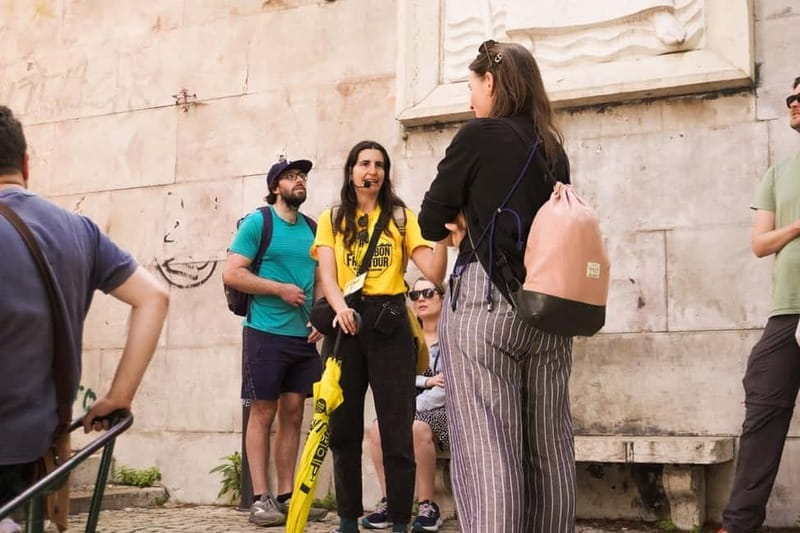
Rossio is a useful place to begin because it puts you in the center of Lisbon’s historic core. Look for the statue in the middle of the square, then find the team with the yellow umbrella and yellow hoodie or T-shirt. That bright meeting point matters in a busy central square, especially if several walking tours are gathering nearby.
From Rossio, the route passes through key areas before reaching Alfama. The early section gives the guide room to explain how Lisbon developed around its hills, riverfront, and older neighborhoods. You are not simply being dropped into a maze of alleys without context. The walk builds toward Alfama, where the lanes become narrower, steeper, and more distinctly residential.
The tour lasts 150 minutes, or two and a half hours. That is enough time for a proper introduction to the district, though it is also long enough for tired legs if you are not used to hills. Wear comfortable shoes and bring water, as the tour information specifically recommends both.
A few more castle tours around Lisbon worth a look
- Lisbon: São Jorge Castle E-Ticket and Audio Guide
★ 4.3 · 2,182 reviews - Lisbon: Sao Jorge Castle Skip-the-Line Ticket with Guide
★ 4.6 · 1,191 reviews - Templar Tour Convent of Christ & Almourol Castle from Lisbon
★ 5.0 · 704 reviews
Why Alfama feels different from the rest of Lisbon
Alfama is one of Lisbon’s oldest districts and one of the few areas that was not destroyed by the 1755 earthquake. That survival helps explain its irregular shape. Instead of broad, planned streets, you get winding passages, sharp turns, stairways, and buildings packed closely together.
The earthquake is not just a distant date in a history lesson. It helps you read the neighborhood. The older street pattern, surviving churches, and tightly built homes give Alfama a character that differs from the more orderly Baixa district rebuilt after the disaster.
The name Alfama comes from the Arabic Al-hamma, meaning hot fountains or baths. That detail adds an earlier layer to the neighborhood’s story. Lisbon’s past here is not limited to royal monuments or grand squares. It also includes the daily life of people who lived around water, hills, churches, music, and small streets.
As you walk, look for azulejos, the painted ceramic tiles used across Portugal. They may appear on façades, around doorways, or inside churches. The tour information points to these tiled surfaces as part of Alfama’s appeal, and they are best appreciated at walking pace, where you can notice small patterns that would vanish from a passing vehicle.
Fado and the sound of Alfama
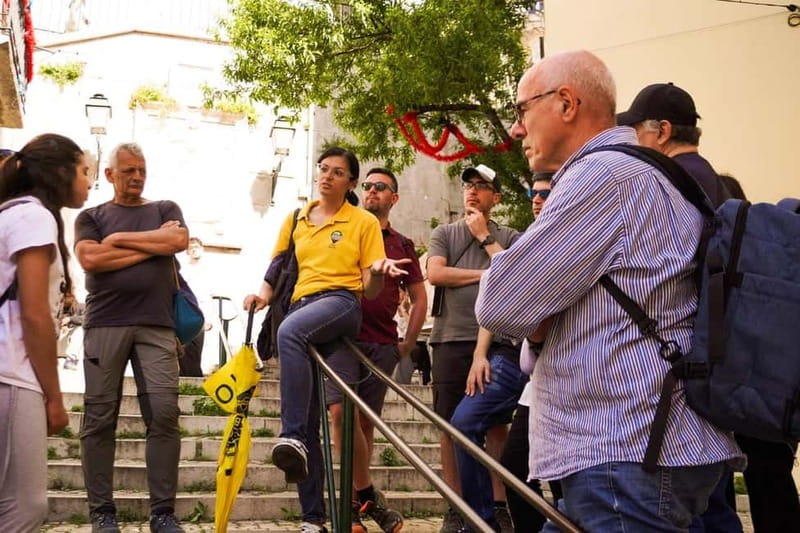
Fado is one of the main cultural subjects of the walk. This Portuguese musical tradition is closely linked with Lisbon, and it is recognized on UNESCO’s world heritage list. A guide can give you the basic setting and explain why Fado belongs so naturally in Alfama’s narrow streets and old taverns.
Do not expect a full concert as part of the tour. The advertised experience promises cultural and historical insight, not a dedicated music performance. Instead, Fado gives the walk a useful theme. It connects the physical neighborhood with the emotion and memory often associated with Lisbon.
I find this kind of explanation more useful than hearing only that Fado is traditional. You can ask the guide about its place in Lisbon and how it fits the city’s identity. The English-speaking guides have room to answer questions, including questions about parts of Lisbon outside the formal route.
Guide quality matters on a history walk, and the available comments identify Andy and Valeria by name. Andy was described as adding humor to his explanations and answering questions beyond the tour’s main subject. Valeria was praised for her warmth and strong command of the material. Guides can change from one departure to another, but these details suggest the experience depends heavily on who leads your group.
Portas do Sol and the best views on the route
The stop at Miradouro Portas do Sol is one of the clearest high points. A miradouro is a viewpoint, and Portas do Sol opens the view across Alfama’s roofs toward the Tagus River.
This is where the neighborhood’s steep layout makes sense. From the viewpoint, the tiled façades and terracotta roofs spread below you, while the river gives Lisbon its wide, open edge. It is a good place to pause rather than rush through another explanation.
Bring your camera, but also take a moment to orient yourself. The viewpoint helps you see how the lanes climb and fold around the hillside. After walking through tight passages, the broad view gives you a welcome change of scale.
The practical drawback is that popular viewpoints can feel crowded, and the tour may not control how long you can linger. The description promises a stop, not a private viewing area or a set amount of free time. Still, the viewpoint is valuable because it ties together the geography discussed during the walk.
Same region, a different set of walls:
- Lisbon: Fado Show and Wine inside Medieval Walls
★ 4.8 · 3,819 reviews - From Lisbon: Tomar, Convent of Christ & Almourol Castle
★ 4.8 · 663 reviews - São Jorge Castle Skip-the-line Entry Ticket
★ 4.5 · 440 reviews - Skip the Line Ticket Castelo de S. Jorge
★ 4.5 · 405 reviews
Churches, monuments, and São Jorge Castle from outside
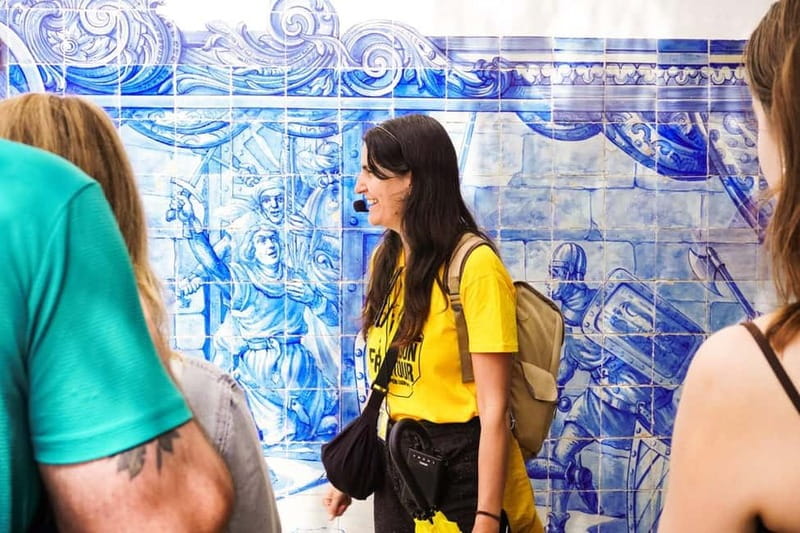
The route includes the history of famous monuments and visits to old churches. Entry to monuments is not included, so you should think of this as an exterior-focused introduction rather than a ticketed sightseeing tour.
That distinction keeps the price low, but it also limits what you see inside. You can learn why a church or monument matters, admire its outside, and make a note of places you may want to revisit later. If you want a detailed look at interiors, art, or exhibits, plan a separate visit and budget for admission.
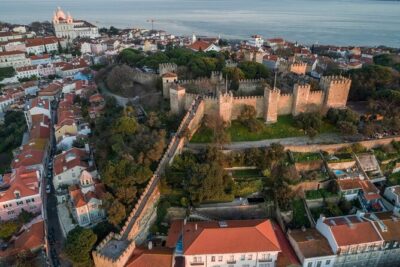
São Jorge Castle is viewed from the outside. The castle is an important landmark above Alfama, and seeing it in relation to the neighborhood helps explain Lisbon’s hilltop setting. You should not expect castle entry, a guided walk through its grounds, or access to its rooms on this tour.
For many people, that is a sensible arrangement. You get the castle in the story of Alfama without paying an admission charge or spending the walking tour inside one attraction. If the castle is a top priority, however, this walk will not replace a dedicated castle visit.
The cathedral is the ending point. Finishing there gives the route a clear endpoint and puts you near another major historic building. The description does not include cathedral entry, so treat the stop as the conclusion of the route rather than an interior tour.
How much value do you get for $1.77?

At $1.77 per person, the advertised price is remarkably low for a 150-minute guided walk in central Lisbon. If the cost is truly all you pay, the value is strong: you receive an English-language guide, a structured route, historical background, and a viewpoint stop without paying for monument entry or transport.
But you should pay attention to how the fee is handled. On one departure, the guide Andy reportedly asked people to place in the hat whatever they felt the tour was worth at the end. That means the displayed amount may not tell the whole financial story for every departure.
I would confirm the payment arrangement before joining. A very low advertised price can be attractive, but a guide deserves fair payment for two and a half hours of work. If the tour operates partly through tips, arrive prepared to contribute rather than treating the small booking price as the complete value of the service.
The low price also explains what is not included. You pay your own way to Rossio Square, and there is no transport to or from the meeting point. Monument entry is separate. For a self-guided day in Lisbon, this can still be an efficient way to get organized and learn the neighborhood before exploring on your own.
Walking conditions and who should book
This is a walking tour through steep, winding streets. Alfama’s charm comes from its hills and irregular lanes, so flat, easy pavement should not be expected. Comfortable shoes are essential, and water is a sensible addition even on a mild day.
The route suits you best if you want local context before exploring Lisbon independently. It is especially useful for a first visit, when it helps to learn the layout of Alfama, understand the earthquake’s effect on the city, and identify places worth returning to.
It also works well for travelers interested in music and culture. The Fado discussion gives the neighborhood more meaning than a simple photo stop, while the old churches and monuments add structure to the walk.
You may want a different experience if you dislike hills, need a fully accessible route, or want extensive time inside monuments. None of those details are promised here. This is a compact cultural walk, not a private sightseeing vehicle, a castle tour, or a church interiors tour.
The advertised language is English, and the tour has a live guide. That makes it a better choice for questions than an audio route, especially if you want to ask about Lisbon beyond Alfama. The group size is not specified, so you should not assume a private or small-group setting.
The suggestion to bring your best costume is unusual and is included in the activity information. It may refer to a playful theme or an instruction connected with the tour, but no further detail is provided. If dressing up matters to you, clarify what is expected before booking. Otherwise, comfortable clothing and shoes should remain your priority.
Booking details worth knowing
You can cancel up to 24 hours in advance for a full refund, and the reserve-now, pay-later option lets you keep your plans flexible. Starting times depend on availability, so check the date carefully before you commit.
The meeting point is Rossio Square, near the statue in the center. Look for the yellow umbrella and yellow clothing. Since transport to the meeting point is not included, allow enough time to reach Rossio on your own.
The activity provider is Discover Lisbon. The stated guide language is English. The tour ends at the cathedral, not back at Rossio, so keep that in mind when planning your next stop. Ending in the cathedral area is useful if you want to continue sightseeing in Alfama, but it means you should not expect a return walk to the original meeting point.
Should you book Discover Alfama?
I would book this tour if you want a low-cost, guide-led introduction to Alfama, especially if Fado, old churches, earthquake history, and city views appeal to you. The 150-minute length gives the neighborhood enough breathing room, and the Portas do Sol stop adds a clear visual reward.
I would be more cautious if you want guaranteed castle or church entry, a flat route, or a clearly fixed all-inclusive price. Confirm the payment setup, carry water, and expect hills.
For most first-time Lisbon visitors, this is a useful way to get your bearings fast without flattening Alfama into a list of monuments. Just remember that the real value lies in the guide’s explanations and your willingness to walk slowly through the old streets, not in ticking off indoor admissions.
FAQ
Where does the Alfama tour begin?
The tour begins at Rossio Square, near the statue in the middle of the square. Find the team with a yellow umbrella and yellow hoodie or T-shirt.
Where does the tour end?
The route ends at the cathedral.
How long does the tour last?
The tour lasts 150 minutes, or two and a half hours.
Is São Jorge Castle included inside the tour?
No. The experience includes an exterior view of São Jorge Castle. Entry to monuments is not included.
What language is the tour in?
The live tour guide speaks English.
What should I bring?
Bring comfortable shoes and water. The route includes steep, winding streets through Alfama.
Just added around Lisbon
- Tomar: Knight’s Templar Castle and Convent of Christ Tour★ 4.9 · 84 reviews
- From Lisbon: Tomar, Christ Convent & Almourol Castle Tour★ 5.0 · 64 reviews
- Sintra: Moorish Castle, Pena Palace, Cabo da Roca, & Cascais★ 5.0 · 6 reviews
- Lisbon Tour: Cristo Rei, Belem, São Jorge Castle, 360°View.★ 4.9 · 18 reviews
- Lisbon: Tower of Saint George’s Castle Church Ticket & Drink★ 3.7 · 37 reviews
- Lisbon: Sintra, Pena, Moorish Castle, Regaleira & Cascais★ 4.8 · 136 reviews
- Lisbon: Saint George’s Castle Entry Ticket and Guided Visit★ 4.6 · 127 reviews
- Lisbon: Saint George’s Castle Entry & City Self-Guided Tours★ 3.6 · 16 reviews
Lisbon Castle Tours, compared.
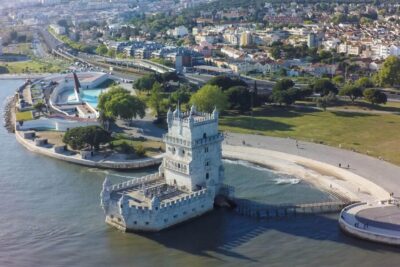
Lisbon: São Jorge Castle E-Ticket and Audio Guide
Read our review →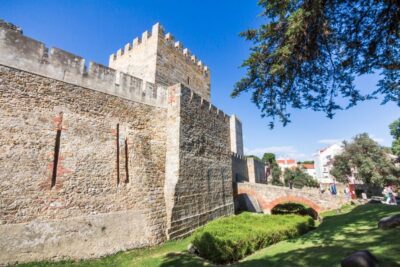
Lisbon: Sao Jorge Castle Skip-the-Line Ticket with Guide
Read our review →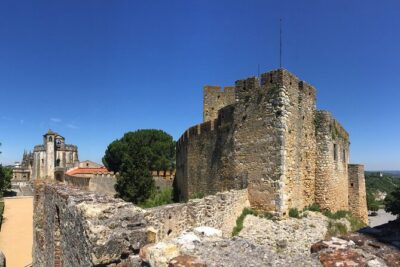
Templar Tour Convent of Christ & Almourol Castle from Lisbon
Read our review →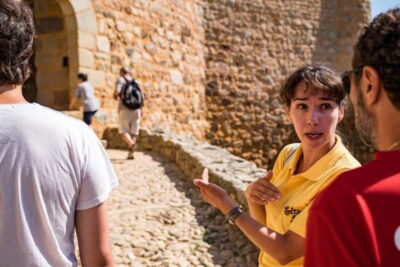
From Lisbon: Tomar, Convent of Christ & Almourol Castle
Read our review →
Lisbon: Pena Palace, Moorish Castle, Qta. Regaleira & Sintra
Read our review →
Sintra Cascais Private Tour with Pena Palace and Mouros Castle
Read our review →Browse the lists this tour appears in