
REVIEW · AUSTRIA CASTLE TOURS
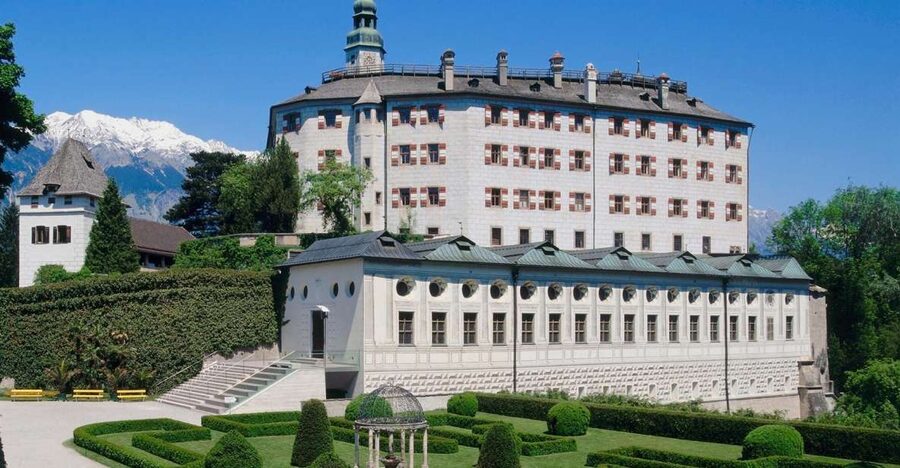
Innsbruck: Tickets for Schloss Ambras
Schloss Ambras packs a remarkable amount of Renaissance curiosity into one visit. You’ll see Ferdinand II’s Chamber of Art and Wonders, filled with coral, ivory, scientific instruments, unusual musical devices, and portraits of people once considered miracles. I like that the collection feels personal rather than polished into a bland royal display.
I also like the armories and Habsburg portrait gallery, which give you two very different ways into the past: one through tournament gear and military power, the other through faces and dynastic politics. The main consideration is that this is admission only. An audio guide and guided tour cost extra, so you’ll need to bring your own context or arrange a private guide.
Key points at a glance
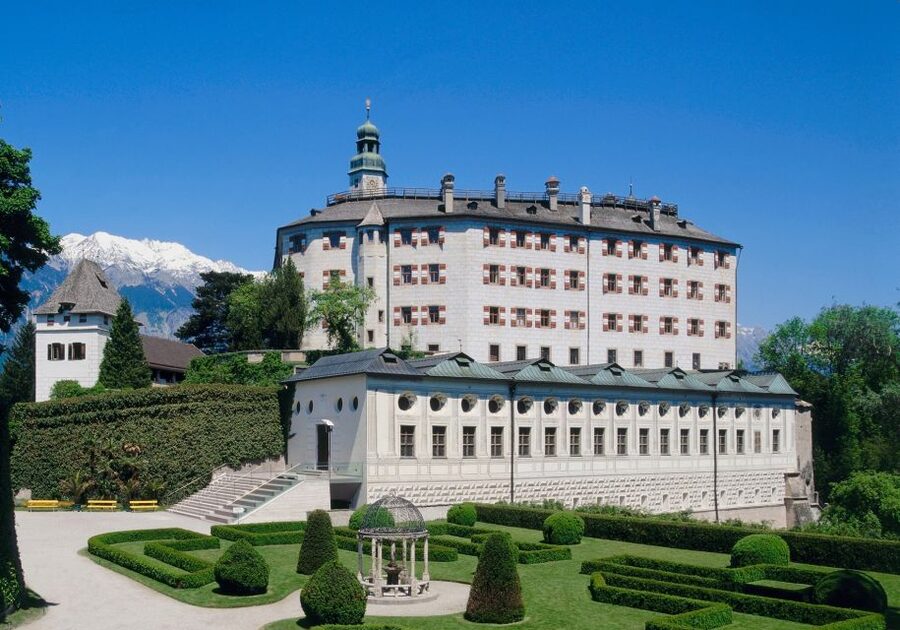
- Renaissance curiosity cabinet: Examine rare natural objects, distant imports, scientific tools, games, and works of art gathered by Ferdinand II.
- Armor with a purpose: See tournament armor, ceremonial equipment, generals’ armor, and the Turkish Chamber.
- More than 200 Habsburg portraits: Look for works linked to Lukas Cranach, Giuseppe Arcimboldo, Peter Paul Rubens, Anton van Dyck, and Diego Velázquez.
- Flexible one-day visit: Your ticket is valid for one day, allowing you to set your own pace.
- Simple admission format: The $16 ticket includes entry to Schloss Ambras, but not a guide or audio guide.
- Useful for families: The strange objects, armor, and portraits of unusual people can hold children’s attention better than a standard painting museum.
Why Schloss Ambras feels different from a standard palace visit
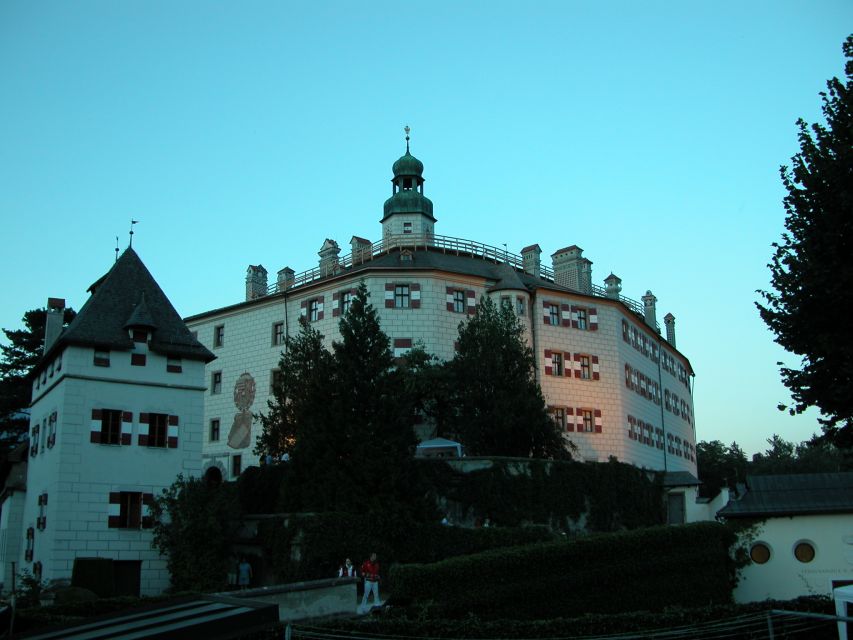
Schloss Ambras is not simply a grand residence with rooms lined in furniture. It opens a window onto how a Renaissance prince wanted to understand the world. Ferdinand II, who lived from 1529 to 1595, gathered objects that mixed art, science, nature, distant cultures, entertainment, and courtly display.
That mixture is the real appeal. You might move from a finely worked ivory object to a scientific instrument, then to a coral specimen or an unusual musical device. The collection asks you to think like a 16th-century collector, when a rare object could be both a work of art and evidence of how the world worked.
I find this approach more rewarding than a palace visit built only around grand rooms. Schloss Ambras shows taste, curiosity, status, and fear in the same place. It also gives you something to talk about afterward, especially if you visit with children who prefer odd objects to rows of formal portraits.
The ticket is designed for an independent visit. You are not joining a fixed sightseeing route, and no guide’s commentary is included. That gives you freedom, but it also means you should take a little time to read the displays and notice how the different collections fit together.
More Entry Tickets in Austria:
- Salzburg: Hohensalzburg Fortress Admission Ticket
★ 4.6 · 2,236 reviews - Forchtenstein Castle Admission Ticket & Optional Guided Tour
★ 4.7 · 16 reviews - Skip-the-line Hohensalzburg Fortress Private Tour and Ticket
★ 4.7 · 9 reviews
Begin with Ferdinand II’s Chamber of Art and Wonders
The Chamber of Art and Wonders is the heart of the experience. Renaissance collectors tried to assemble an encyclopedic picture of the world, and Ferdinand II’s collection reflects that ambition. It includes objects prized for beauty, rarity, technical skill, foreign origin, or sheer strangeness.
This is where you’ll find the famous Tödlein, along with objects made from ivory and coral. Those materials mattered because they were difficult to obtain and shape, and because their natural origins added to their appeal. A coral object could suggest the far reaches of the natural world, while carved ivory showed the skill and patience of the maker.
You’ll also see scientific objects, including an attachment with a compass. Such pieces remind you that the collection was not divided into the neat categories used by modern museums. Art, science, nature, and entertainment were all part of the same effort to make sense of the world.
Look closely at the foreign objects, including the Ryukyu bowl. Its presence points to the long-distance connections behind Renaissance collecting. You do not need a specialist background to appreciate it. The important point is that an object from far away could carry as much meaning as a painting or a jewel.
The room also includes games and unusual musical instruments. These details help keep the visit from becoming too solemn. You can picture a court collection as a place for conversation, surprise, and amusement, not only silent admiration.
The strange portraits that give the collection a human edge
Among the objects are portraits of people considered miracles, including the hairy man. These works can seem startling today, but they reveal how earlier societies responded to physical difference and unusual appearances.
I would not rush past these portraits. They tell you something about the period’s curiosity and its limits. People who were treated as wonders were often viewed through the eyes of court culture, where unusual bodies could become subjects of fascination and display.
For children, this section may be one of the easiest parts of the museum to remember. For adults, it is a useful reminder to look at the collection critically. You can admire the craftsmanship while also asking what it meant for a real person to be presented as an extraordinary object.
The Chamber of Art and Wonders is especially good for visitors who enjoy museums with a little unpredictability. You are not following one artistic movement or one family tree. You are moving through an old attempt to gather the whole world under one roof.
See tournament armor and the Turkish Chamber
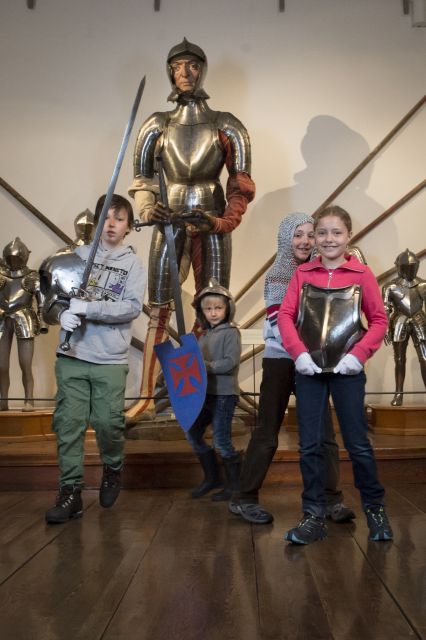
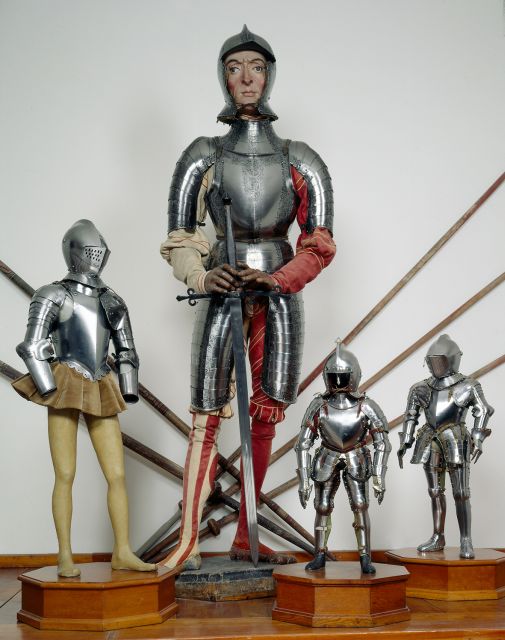
The Armories shift the mood from curiosity to ceremony and military power. Here you’ll find rare tournament armor, armor used for courtly festivals, and armor associated with famous generals.
Tournament armor is worth taking time with because it was not simply practical battlefield equipment. It was built for controlled contests and public display, where the appearance of the wearer mattered almost as much as protection. Ceremonial armor, in turn, shows how rulers used clothing and equipment to project rank during court events.
The collection also includes Ferdinand II’s Turkish Chamber. This section records both fear of the Turks and fascination with the Orient in the 16th century. That combination is important. The objects do not present a neutral modern account of cultural exchange. They reflect the anxieties and interests of a European court living in a period of political and military tension.
I like this part of Schloss Ambras because it adds context to the more playful collection rooms. The prince’s interests were not limited to pretty or curious objects. His collections also expressed power, conflict, status, and the reach of his court.
If you visit with children, the armor provides an easy visual anchor. Even without a guided explanation, the size, shape, and purpose of the pieces are clear. If you want deeper historical context, the absence of an included guide becomes more noticeable here.
A few more castle tours around Austria worth a look
- Salzburg: Best of Mozart Fortress Concert and Dinner
★ 4.5 · 1,424 reviews - Salzburg: Best of Mozart Fortress Concert
★ 4.6 · 762 reviews - Best of Mozart Concert and Dinner or VIP Dinner at Fortress Hohensalzburg
★ 4.5 · 598 reviews - Salzburg: River Cruise, Dinner & Fortress Concert
★ 4.6 · 406 reviews
Take your time in the Habsburg portrait gallery
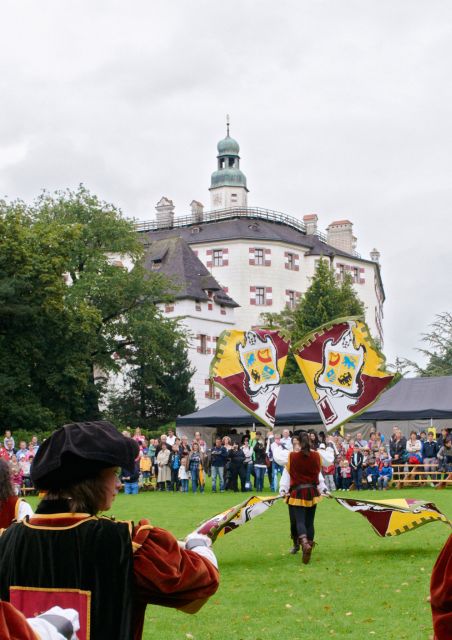
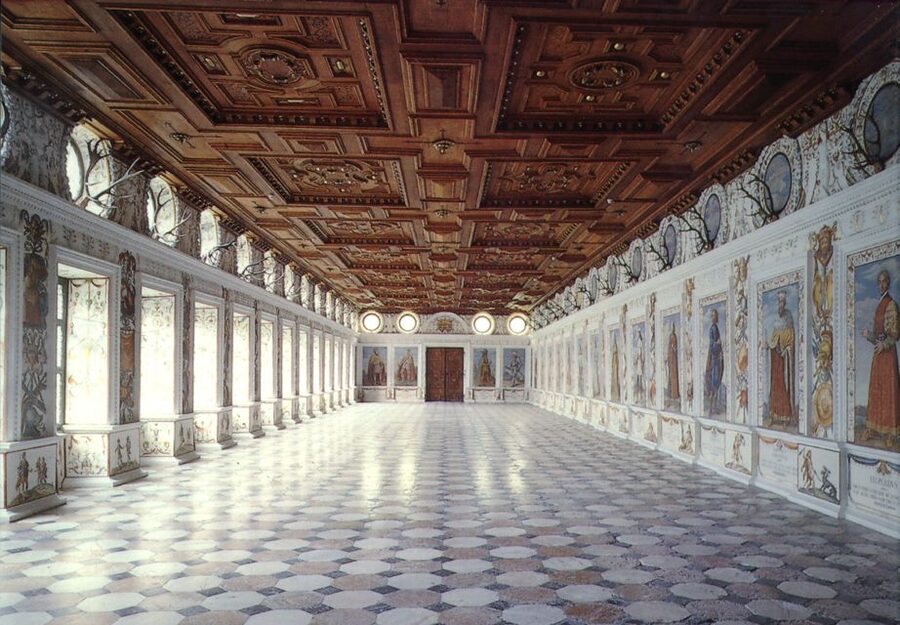
The Habsburg portrait gallery contains more than 200 paintings, covering a long stretch of the dynasty. The portraits range from the time of Albrecht III, who lived from 1349 to 1395, through the reign of Emperor Franz II, also known as Franz I, who lived from 1768 to 1835.
This is a large group of paintings, and it rewards a selective approach. You do not need to study every face equally. Instead, look at how clothing, posture, jewelry, and expression change across the centuries. These portraits were not just family photographs. They communicated rank, continuity, marriage alliances, and control.
The gallery includes important works by Lukas Cranach, Giuseppe Arcimboldo, Peter Paul Rubens, Anton van Dyck, and Diego Velázquez. Those names give the collection real artistic weight, but the gallery works best when you balance famous painters with the broader story of the Habsburg family.
Arcimboldo’s work is likely to attract immediate attention because of its unusual visual language. Rubens, van Dyck, and Velázquez offer different examples of court portraiture and artistic style. Cranach connects the gallery to an earlier period of Northern European painting.
At $16, the portrait gallery alone gives the admission strong value for anyone who enjoys European art. It is also the section most likely to tire you if you try to inspect every painting in detail after already spending time in the armories and curiosity collection. I suggest choosing a few portraits and reading the information around them rather than treating the room as a checklist.
A one-day ticket lets you set the pace
The ticket is valid for one day, and that flexibility matters because Schloss Ambras contains several collections with very different moods. You can move quickly through the sections that interest you less and spend more time with the objects that catch your eye.
No duration is specified beyond the one-day validity, so you should think of this as a self-paced museum visit rather than a timed tour. Starting times depend on availability when you book, but the ticket itself does not force you into a guided schedule.
The meeting point is Schloss Ambras, Schlossstrasse 20, 6020 Innsbruck. Since transportation details are not included, check your route to the castle before setting out. The admission ticket gets you into the museum, but it does not provide transport or a guide.
The free-cancellation policy allows you to cancel up to 24 hours in advance for a full refund. You can also reserve now and pay later, which is useful if your Innsbruck plans are still shifting.
What the $16 admission includes
For $16 per person, you receive admission to Schloss Ambras in Innsbruck. That covers the main experience: the Chamber of Art and Wonders, the armories, the Turkish Chamber, the Antiquarium, and the Habsburg portrait gallery.
The value is strongest if you enjoy museums with several distinct collections rather than a single famous object. You are paying for access to Renaissance collecting, armor, dynastic portraiture, and related displays in one place.
The ticket does not include an audio guide or guided tour. You may come with a private tour guide, but that arrangement is separate. If you are visiting alone and prefer detailed explanations, this is the main extra cost or planning point to consider.
For groups, the admission rules are specific. One guide per group receives free admission if the group has at least 10 people and the guide accompanies the group to the museum. Groups with fewer than 10 people do not receive free guide admission. A state-certified tourist guide always receives free admission.
These rules matter if you are organizing a larger party. For a couple or family buying ordinary tickets, they are less important, but it is still useful to know that a private guide is not automatically included.
Who will enjoy this visit most
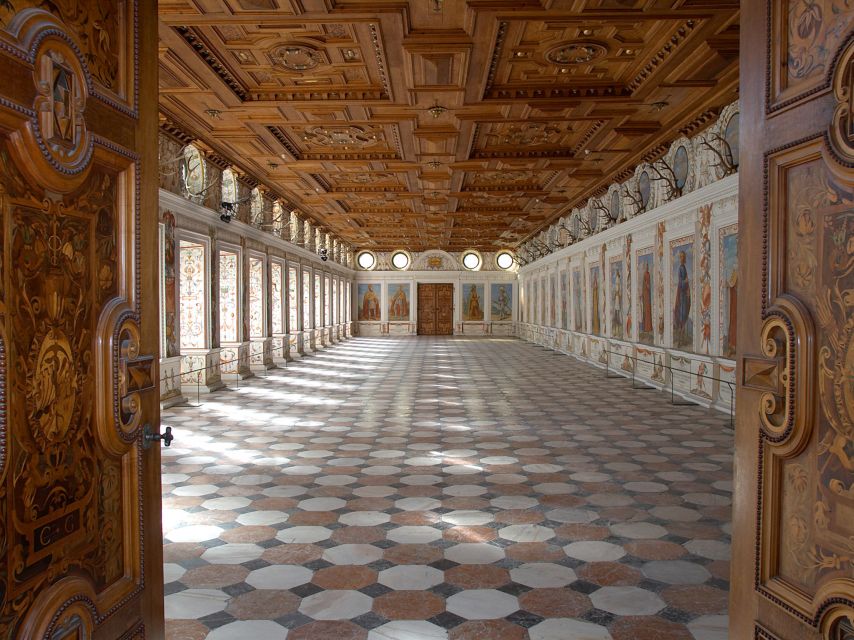
I would recommend Schloss Ambras to anyone who likes unusual museum collections, court history, armor, or European painting. It works particularly well for people who want more than a conventional palace interior.
Families may find the Chamber of Art and Wonders and the armories easier to enjoy than a museum made entirely of portraits. The hairy man, coral, ivory, games, scientific objects, and armor give younger visitors concrete things to spot.
Art lovers should make time for the Habsburg portrait gallery. The presence of works by Cranach, Arcimboldo, Rubens, van Dyck, and Velázquez gives the collection more depth than a typical regional portrait display.
You may want to reconsider this ticket if you want a fully narrated visit with a clear route and historical explanation at every stop. Since no audio guide or guided tour is included, you will need to supply that structure yourself or pay for additional help.
Practical ways to get more from the collections
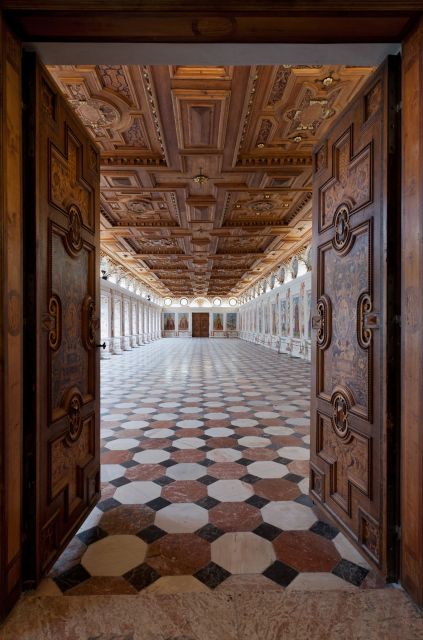
Start by noticing the variety in the Chamber of Art and Wonders rather than trying to identify every object. Ask yourself why a particular piece might have fascinated a Renaissance prince. Was it rare, technically difficult, foreign, natural, strange, or useful?
In the armories, separate tournament equipment from ceremonial armor in your mind. The distinction helps you see how armor could serve sport, public display, and warfare.
In the portrait gallery, compare faces from different periods. Look for changes in clothing and presentation, and consider how each image supports the power of the Habsburg family.
If you are visiting with children, turn the collection into a search for oddities: coral, ivory, the compass, games, unusual instruments, the hairy man, and the most striking armor. The museum’s variety gives you plenty of ways to keep the visit active without inventing a complicated game.
I would also avoid measuring the experience only by famous paintings. The peculiar objects are what make Schloss Ambras memorable. The collection’s value comes from the conversation between art, science, nature, travel, court ceremony, and military display.
Should you book Schloss Ambras?
Book it if you want an independent museum visit with strong variety and a clear Renaissance character. For $16, you get access to a Chamber of Art and Wonders unlike a standard gallery, substantial armor collections, the Turkish Chamber, the Antiquarium, and more than 200 Habsburg portraits.
I especially recommend it to families, art lovers, and anyone who enjoys strange historical objects as much as famous names. The one-day validity and free cancellation up to 24 hours before the visit make planning fairly flexible.
Skip it only if you need a guided experience included in the ticket or if your interest is limited to one narrow type of art. Otherwise, Schloss Ambras offers a useful change of pace from Innsbruck’s city sights, with enough odd, beautiful, and serious material to fill a rewarding visit.
FAQ
Where is Schloss Ambras located?
Schloss Ambras is at Schlossstrasse 20, 6020 Innsbruck, in Tyrol, Austria.
What does the ticket include?
The ticket includes admission to Schloss Ambras in Innsbruck. It covers the museum collections, including the Chamber of Art and Wonders, armories, the Turkish Chamber, the Antiquarium, and the Habsburg portrait gallery.
Is a guide included?
No. An audio guide and guided tour are not included. You may visit with a private tour guide.
How long is the ticket valid?
The ticket is valid for one day. Starting times depend on availability when you book.
Can I cancel the booking?
Yes. You can cancel up to 24 hours in advance for a full refund.
Do tour guides receive free admission?
One tour guide per group receives free admission when accompanying a group of at least 10 people to the museum. Groups with fewer than 10 people do not receive free admission for a guide. State-certified tourist guides always receive free admission.
Just added around Austria
- Skip-the-line Hohensalzburg Fortress Private Tour and Ticket★ 4.7 · 9 reviews
- Salzburg Old Town, Fortress, Cathedral Private Walking Tour★ 4.5 · 41 reviews
- Salzburg: River Cruise & Best of Mozart Fortress Concert★ 3.9 · 14 reviews
- Salzburg: Christmas/Advent Concert at Fortress Hohensalzburg★ 4.4 · 54 reviews
- Mauterndorf: Castle Entrance Ticket★ 4.7 · 8 reviews
- Forchtenstein Castle Admission Ticket & Optional Guided Tour★ 4.7 · 16 reviews
- Mozart Concert and Dinner or VIP Dinner at Fortress Salzburg with River Cruise★ 4.5 · 280 reviews
- Salzburg: River Cruise, Dinner & Fortress Concert★ 4.6 · 406 reviews
Austria Castle Tours, compared.
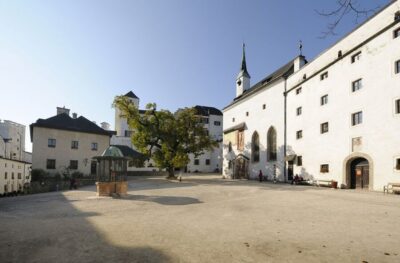
Salzburg: Hohensalzburg Fortress Admission Ticket
Read our review →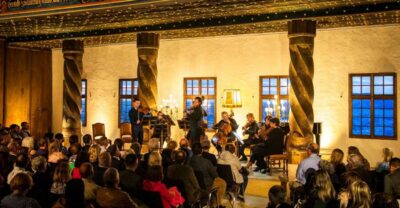
Salzburg: Best of Mozart Fortress Concert and Dinner
Read our review →

Best of Mozart Concert and Dinner or VIP Dinner at Fortress Hohensalzburg
Read our review →
Salzburg: River Cruise, Dinner & Fortress Concert
Read our review →
Mozart Concert and Dinner or VIP Dinner at Fortress Salzburg with River Cruise
Read our review →
Salzburg: Christmas/Advent Concert at Fortress Hohensalzburg
Read our review →
Salzburg Old Town, Fortress, Cathedral Private Walking Tour
Read our review →Browse the lists this tour appears in