
REVIEW · DRACULA & TRANSYLVANIA CASTLES
5-Day Private Dracula’s Legends Tour from Bucharest
The real appeal of this five-day private tour is its sweep. You move from Vlad the Impaler’s former court in Târgoviște to his birthplace in Sighișoara, then on to Bran Castle and the small monastery linked with his burial. Along the way, Romania’s medieval towns, royal palaces, churches, and a huge salt mine keep the story from becoming a one-note vampire hunt.
I like the private transport and the fact that four breakfasts and four hotel nights are included. You avoid the strain of arranging long connections across Transylvania, and your guide can shape the day around your group. I also like the mix of stops: Sibiu, Alba Iulia, Cluj-Napoca, and Brașov give you a broader view of Romania than a castle-only trip.
The main consideration is pace. The schedule packs a large section of the country into five days, with several stops each day. Museum tickets are extra, the single-room supplement is 120 euros, and the price of $1,331.24 per person makes most sense if you value private service and want transport, lodging, and guiding handled together.
Five useful things to know before booking
- Vlad’s trail is wider than Bran Castle: You visit Târgoviște, Sighișoara, Corvin Castle, Bran, and Snagov, each tied to a different part of the Dracula story.
- The route includes four hotel nights and breakfasts: That removes two major planning chores, though the exact hotels are not specified.
- Your guide and driver are central to the experience: Guides may include Mathias or Paul, and the tour can operate with a multilingual guide.
- The schedule is full: Most sightseeing blocks last one to three hours, with several towns and monuments in a single day.
- Castle and mine admissions cost extra: Bran Castle, Peles Castle, Corvin Castle, Salina Turda, and Snagov Monastery are not included.
- It is private, but not leisurely: Only your group participates, yet the route covers a lot of ground from a 9 a.m. departure each day.
Why this tour works for Dracula history
The Dracula legend is often reduced to one castle and a cape. This route gives you the more useful version: Vlad III was a 15th-century prince associated with Wallachia, a ruler remembered for brutal methods, and a figure later transformed by Bram Stoker’s fiction.
You begin in Târgoviște, once the capital of Wallachia and home to Vlad’s princely residence. The Chindia Tower, built during Vlad’s time and still preserved, gives the story a real place to begin. Later, Sighișoara connects directly to Vlad’s birth in 1431, while Snagov carries the tradition that he was buried there in 1476.
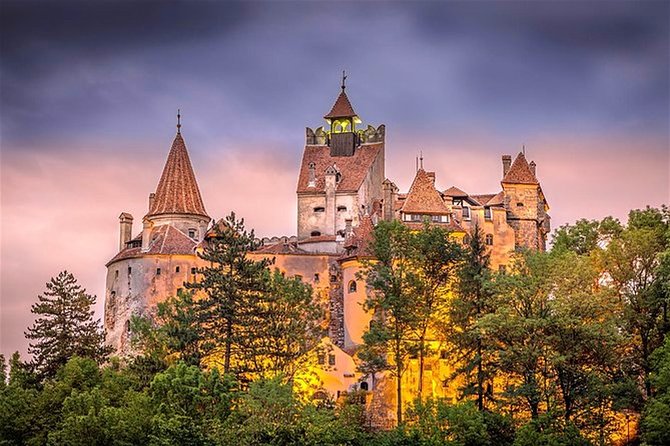
Bran Castle is the famous name, but its connection to Vlad is more legend than biography. That is not a weakness if you want a good story. It is simply worth knowing what you are seeing. The castle is famous because it resembles the popular Dracula image, while its interiors also reflect Queen Marie’s use of the castle in the 1920s.
Your guide matters here. A good guide can separate medieval history from later fiction without draining the fun from the tale. Mathias is specifically praised for handling difficult weather and traffic while driving safely, and Paul is described as accommodating, well informed, and a terrific driver. Guide assignments can change, but those details show why the driver-guide role is important on this route.
More Dracula and Transylvania Castle Tours in Bucharest:
- Bucharest: Dracula’s Castle, Peles Castle, & Brasov Old Town
★ 4.5 · 17,858 reviews - Bucharest: Dracula Castle, Peles Castle & Brasov Old Town
★ 4.6 · 10,891 reviews - Bucharest: Dracula’s Castle, Peleș Castle & Brașov Day Trip
★ 4.4 · 6,100 reviews
Day 1: Târgoviște, Curtea de Argeș, and Sibiu
Pickup begins at your hotel at 9 a.m. The first stop is Târgoviște, where you have about an hour to see the former princely court. The first fortification walls were built under Mircea the Oldest, Vlad’s grandfather, while Vlad is linked with the Chindia Tower in the courtyard.
This is a strong opening because it puts Vlad into a political setting. You are not simply looking at a spooky building. You are seeing the seat of Wallachian power and the remains of a defensive court tied to Romania’s medieval rulers.
Curtea de Argeș follows, also for about an hour. Its monastery is one of southern Romania’s important Orthodox religious sites, known for its oriental decoration and four towers. Romanian rulers are buried here, so the stop shifts the focus from Vlad’s military story to royal ceremony and faith.
You then spend about three hours in Sibiu, named a European Capital of Culture in 2007. Its medieval center is one of the most attractive urban stops on the route. This is your first chance to slow down a little and enjoy a city rather than a single monument.
The drawback is that Day 1 asks you to cover three major places after leaving Bucharest. You will get an introduction to each, not a full museum-by-museum visit. If you want long café stops or extended time inside every church and monument, this schedule may feel tight.
Day 2: Corvin Castle and Alba Iulia’s Habsburg citadel
Corvin Castle, also called Hunyad Castle, gets about 90 minutes. Built by John Hunyadi in a Gothic style with Renaissance touches, it is one of the most dramatic castle visits on the itinerary.
The Vlad connection is intriguing but should be treated carefully. The tradition says Vlad Tepes was held there for seven years after his deposition in 1462, as a hostage of John Hunyadi. The castle itself is the main attraction, with its Gothic form and military setting. Admission is not included.
Alba Iulia follows for about an hour. The old town sits within a major Habsburg citadel, laid out with broad, tree-lined streets. You can see the Roman Catholic Cathedral, the Orthodox Cathedral of the Reunification, the Union Hall, the Princely Palace, and buildings connected with the city’s cultural and political past.
This day offers a useful change of mood. Corvin Castle supplies the medieval drama, while Alba Iulia shows how later imperial planning shaped Transylvanian cities. The one-hour visit in Alba Iulia is enough for an overview, but not enough for a detailed look inside every listed site.
Day 3: Salina Turda, Cluj-Napoca, and Bistrița
Salina Turda is one of the route’s most unusual stops. You descend roughly 400 feet into a former salt mine, where the underground complex includes an amphitheater, bowling alley, an underground lake with paddle and row boats, and a Ferris wheel.
You have about two hours there, and admission is extra. The mine makes the tour feel less repetitive. After churches, towers, and castles, you get a completely different setting created by salt extraction and later visitor facilities.
Next comes Cluj-Napoca, Romania’s second-largest city and a major university and cultural center. The visit lasts about an hour. Expect a quick look at a modern Romanian city with medieval landmarks, older architecture, and a younger urban feel.
Bistrița receives about two hours and carries one of the clearest literary links to Dracula. In Bram Stoker’s novel, Jonathan Harker spends the night here. Historically, Bistrița is also one of Transylvania’s seven fortified cities, so the stop works on two levels: literary association and medieval town history.
For many people, this will be the most varied day. The tradeoff is the same: two hours at Salina Turda is enough to see the main underground features, but not necessarily enough to linger everywhere. Wear sensible shoes and be ready for a moderate amount of walking, since the tour calls for a moderate fitness level.
A few more castle tours around Bucharest worth a look
Day 4: Târgu Mureș, Sighișoara, and Brașov
Târgu Mureș is a one-hour stop known for its Romanian-Hungarian character and its Secession-era buildings from the Austro-Hungarian period. The Palace of Culture, Prefecture, and religious buildings line the area known as Rose Avenue.
The short visit gives you a quick look at Transylvania’s mixed cultural identity. This is one reason I prefer the route to a narrow Dracula itinerary. You see how Romanian and Hungarian traditions share the same cities, streets, and public buildings.
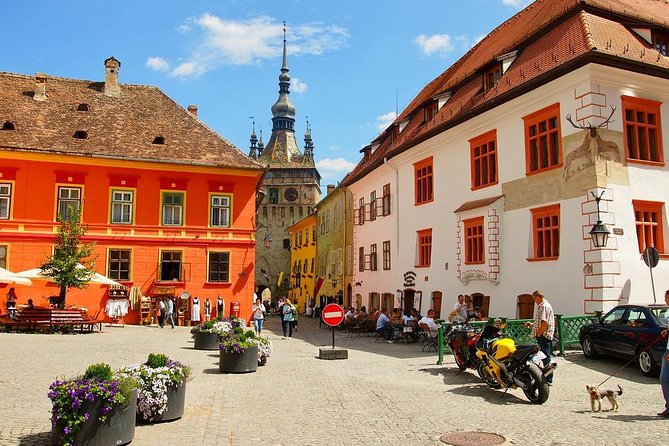
Sighișoara is the day’s major stop, with about three hours. Its historic center is a UNESCO site, filled with colorful houses, churches, and the Clock Tower. It is also associated with Vlad Dracula’s birth in 1431.
Give Sighișoara your attention. The fortified center is compact enough to explore on foot, and three hours is more generous than the time given to several other towns. The city’s appeal is not only the Vlad connection. Its streets and towers make the medieval setting feel tangible without needing theatrical effects.
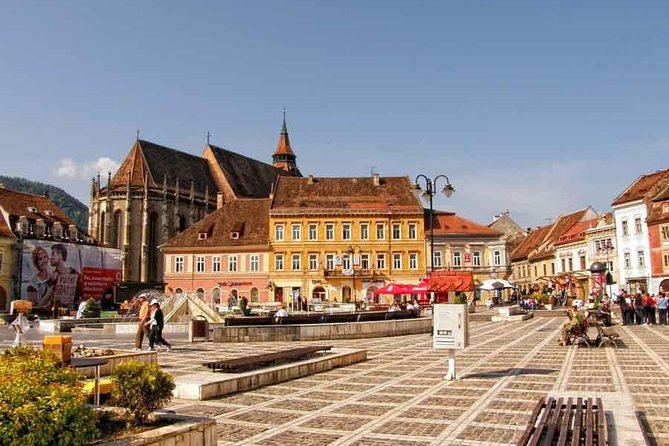
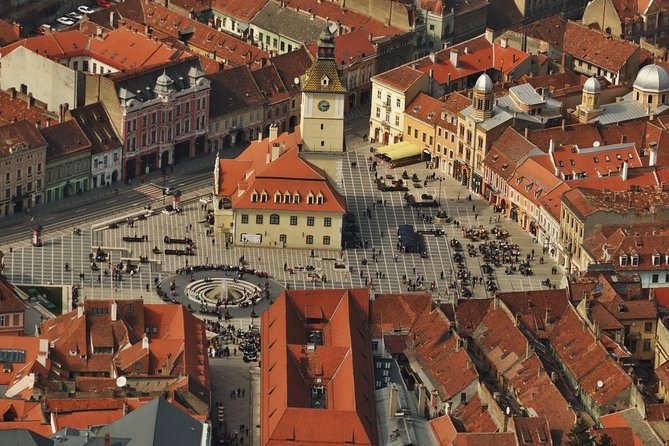
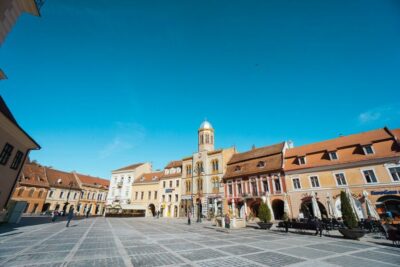
Brașov comes later, with about three hours in the historic center. Formerly known as Kronstadt, it includes Council Square, Ecaterina Gate from the 16th century, and Schei Gate from the 19th century.
This is another full day, and the order means you may reach Brașov after a substantial amount of sightseeing. Still, the three-hour block lets you get more than a quick photograph. The admission fee is not included, so ask your guide which paid sites fit best into your available time.
Day 5: Bran, Peles, and Snagov
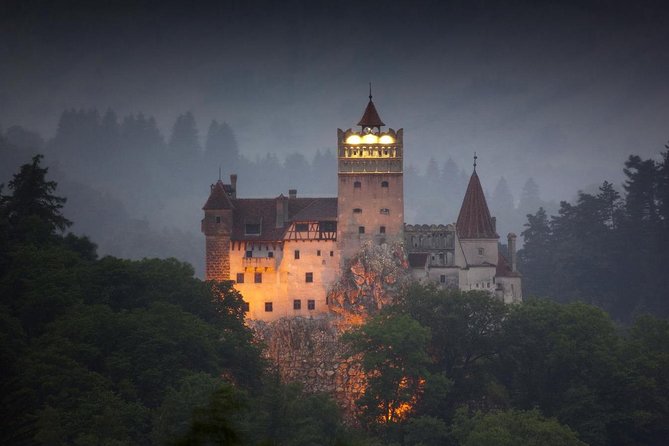
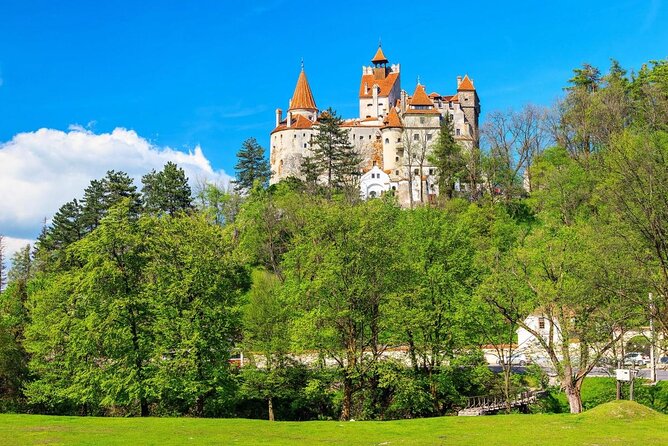
Bran Castle is the headline stop. The castle sits on a rocky hill and dates to the 14th century. Its Gothic appearance helped make it the place most closely tied to Dracula in popular culture.
Inside, you will also encounter a different story. Queen Marie chose the interiors in the 1920s, giving the castle a more refined royal character than the dark fortress image suggests. You have about two hours, and admission is extra.
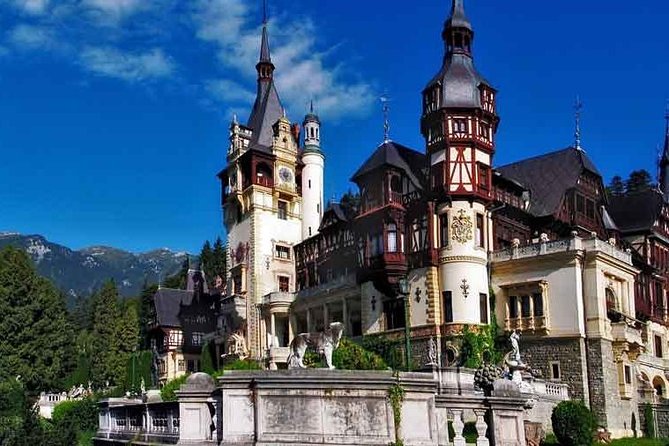
Peles Castle provides a strong contrast. It was the summer residence of Romania’s first king, Charles I of Hohenzollern, and was designed by a Czech architect. Construction took place between the 19th and 20th centuries, and each room uses a different decorative style.
The Florentine room is singled out for its Italian Renaissance feel. Peles is not part of the Dracula story, but it may be the tour’s most impressive royal residence. The visit helps you see Romania beyond medieval legends and into the period of its modern monarchy.
The final stop is Snagov Monastery, on a small island in Lake Snagov near Bucharest. Tradition holds that Vlad was buried there in 1476. You have about an hour, and admission is not included.
Ending at Snagov gives the story a neat closing point, though the burial claim is part of the legend surrounding Vlad. It is also a quieter stop after the crowds and castle drama of Bran and Peles.
What the $1,331.24 price covers
The price includes four nights of accommodation, four breakfasts, hotel pickup and drop-off, an air-conditioned minivan, a driver-guide, and private touring for your group. That is a meaningful package for a route crossing several Romanian regions.
You are paying for convenience as much as sightseeing. Instead of piecing together trains, buses, hotels, and local guides, you have one vehicle and one guide for the full journey. Private service also means you are not placed with strangers, and the group can receive more direct attention.
The value is less clear if you already have a car, enjoy arranging your own hotels, or prefer to spend several days in one city. Museum admission is extra, and the 120-euro single-room supplement is paid locally by cash or card. Tips for the guide and driver are also not included.
Group discounts may help reduce the per-person cost. For a couple or small group that wants a guided route without driving, the package is easier to justify. Ask for the hotel category and the planned overnight towns before booking, since those details are not specified.
Who should book this private Dracula tour?
I would recommend it to a first-time visitor who wants to see a broad slice of Romania in five days and prefers not to manage long-distance transport. It suits people who enjoy castles, fortified towns, churches, royal residences, and the history behind a famous legend.
It also works well for a group that wants a private guide. Mathias and Paul have both been singled out for safe driving, flexibility, and good service, though the assigned guide may be different and may speak several languages.
I would hesitate if you want a slow holiday. The route is ambitious, and the daily plan has several stops. You should also be comfortable with moderate physical activity and with paying separate entrance fees at several major attractions.
Weather matters, too. The experience requires good conditions. If poor weather cancels the tour, you are offered another date or a full refund. If the minimum number of participants is not met, the same choice applies. Otherwise, the booking is non-refundable and cannot be amended, so make your dates carefully.
FAQ
What is included in the five-day tour?
The tour includes four nights of accommodation, four breakfasts, hotel pickup and drop-off, private touring, an air-conditioned minivan, and a driver-guide.
Are entrance tickets included?
No. Admission to museums and several attractions is not included. This specifically applies to Corvin Castle, Salina Turda, Bran Castle, Peles Castle, and Snagov Monastery.
What time does the tour begin?
Pickup begins at 9:00 a.m. from your hotel.
Is this a private tour?
Yes. Only your group participates in the private tour or activity.
Is there an extra charge for a single room?
Yes. The single-room supplement is 120 euros, payable locally by cash or credit card.
What happens if bad weather cancels the tour?
If poor weather causes cancellation, you are offered a different date or a full refund. The same options apply if the required minimum number of participants is not met.
Should you book it?
Book this tour if you want Romania’s Dracula story placed in a much larger setting. You will see Vlad-linked sites, but also Sibiu, Alba Iulia, Cluj-Napoca, Sighișoara, Brașov, a salt mine, and a royal palace. That range is the tour’s best feature.
Skip it if you want long, unhurried visits or a low-cost independent trip. For everyone else, the private minivan, included lodging and breakfasts, and guide-led context make the $1,331.24 price easier to understand. Just budget for entrance fees, tips, and the single-room supplement before you commit.
Just added around Bucharest
- Vlad the Impaler Royal Court from Târgoviște, Peleș Castle and Dracula grave★ 5.0 · 8 reviews
- Dracula Castle, Peles Castle & Brasov-Private Tour from Bucharest★ 5.0 · 80 reviews
- Private Tour to Salt Mine, Lunch at Winery and Dracula Grave★ 5.0 · 60 reviews
- From Bucharest: Brasov & Dracula’s Castle Transylvania★ 5.0 · 5 reviews
- Transylvania Castles 4-day tour from Bucharest★ 5.0 · 31 reviews
- Dracula’s Tomb Snagov Monastery | Mogosoaia Palace – PrivateTour★ 5.0 · 7 reviews
- Bears Sanctuary, Dracula’s Castle and Brașov City – Private Tour★ 5.0 · 10 reviews
- Private tour to Bran Dracula’s Castle and Peleș Royal Castle★ 5.0 · 4 reviews
Dracula & Transylvania Castles, compared.
Bucharest: Dracula’s Castle, Peles Castle, & Brasov Old Town
Read our review →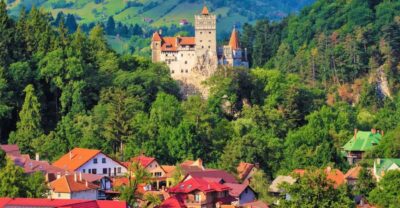
Bucharest: Dracula Castle, Peles Castle & Brasov Old Town
Read our review →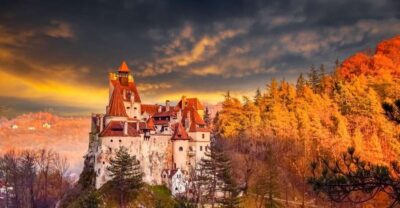
Bucharest: Dracula’s Castle, Peleș Castle & Brașov Day Trip
Read our review →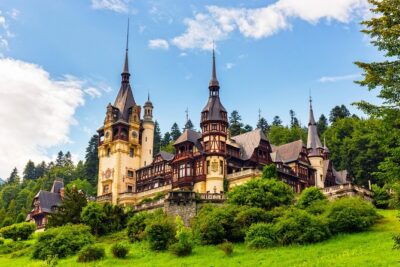
Bucharest to Dracula Castle, Peles Castle and Brasov Guided Tour
Read our review →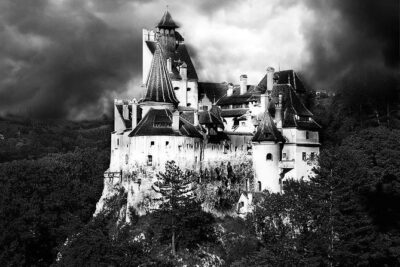
Dracula’s Castle, Peles Castle and Brasov Day Trip from Bucharest
Read our review →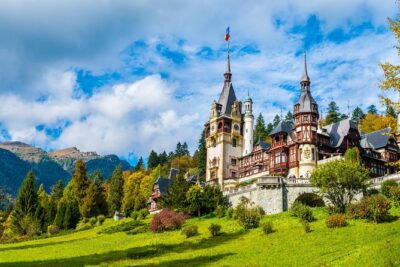
Transylvania and Dracula Castle Full Day Tour from Bucharest
Read our review →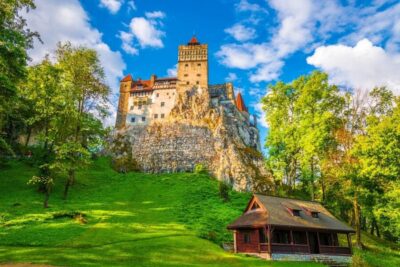
From Bucharest: Brasov Peles & Dracula’s Castle Day Tour
Read our review →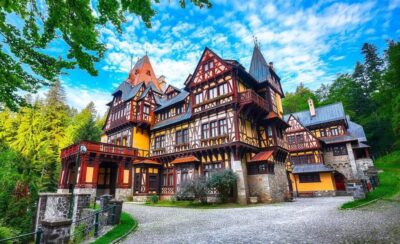
Bucharest: Peles Castle, Bran Castle, & Brasov Old Town Tour
Read our review →Browse the lists this tour appears in